

As Tripura waits for the 2023 Vidhan Sabha election results on March 2, let’s look at a few factors that impacted voting patterns and decisions in the elections.
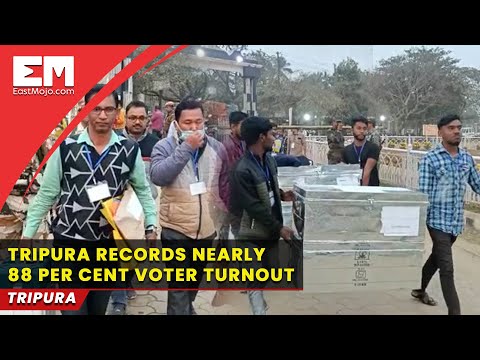
On February 16, the state recorded over 85% voter turnout from the 60 constituencies. While the state has a majority Bengali population comprised of SC (Scheduled Caste) reserved and general constituencies. 20 constituencies are reserved for the ST (Scheduled Tribe).
Around 19 tribal groups in the state are spread over these constituencies and beyond. The BJP (Bharatiya Janata Party), INC (Indian National Congress) in alliance with the Left Front, and TIPRA Motha (Tipraha Indigenous Progressive Regional Alliance) were the major political players in this election.
This analysis is based on interviews, discussions and observations at urban constituencies, including Badharghat, Barjala and Pratapgarh, and ST reserved constituencies, including Takarjala, Bagma, and Golaghati.

Was Tripura ever peaceful?
Peace was an often discussed topic amongst the voters. Opinions varied on whether the 25 years of Left Front governance were more peaceful than the BJP-ruled period of the last five years. Incidences of political violence were reported from both sides.
Two terms: ‘bike-bahini’ and ‘mafia’ were often heard in association with polling-related fear, disturbance and violence. The former term was reported to be associated with BJP and the latter with the Left parties. Some shared that it was the erstwhile ‘mafia’ of Left parties that joined BJP when the tides were turning and became part of the now active ‘bike-bahini’. A BJP youth worker from the Bhattapukur area of the Badharghat constituency smiled and said, ‘no evidence will be found if someone is probing about bike-bahini.’

Governance for 25 years at a stretch by one party made people long for change. And BJP came to power in 2018. Whether that change was able to fulfil their expectations is unclear. However, people were willing to give more time to the ruling party, because the government’s performance was hampered for two years due to the pandemic. The propaganda of free vaccines and free ration seemed to hit right. The Hindu-Muslim propaganda run by the ruling BJP government was able to impact certain voters in favour of the BJP but the Citizenship Amendment Act issue did not seem to hold much ground.
BJP, the ruling government, with its access to money and muscle power along with a strong propaganda machinery certainly had many advantages in the recently held election. Moreover, infrastructural development (roads and drainage) and certain other policies seemed to have generated public support for them, especially in urban constituencies. The Modi factor too worked as many voters considered him to be a capable Prime Minister. Moreover, the removal of Biplab Deb as the Chief Minister and replacement with Dr Manik Saha was a move welcomed by the voters. Dr Manik Saha had a clean image amongst the public and his projection as the chief ministerial candidate gave hope for better governance.
Culture of donation and problem of inflation
Instances of collecting donation for political requirement practised during the Left Front governance period was not remembered fondly by the voters. According to many, it is a relief that in the last 5 years, there was no donation drive for political meetings or events. Yet, according to others, now there is inflation instead. Amongst the lower income earners especially, the price rise of essentials was seen as the larger evil and hence they hoped for a turn back to the 25 years of Left Front governance.

First-time voters and job prospects
While the elderly population saw ‘peace’ as the primary issue, for the youth, job prospects held the key. Especially for first-time voters, future job prospects almost aligned with their hope of seeing the BJP come to power again. The reason cited was the fair selection process and exams held during the last 5 years. According to many youth voters, it was a welcome change from the practices of the earlier Left Front governments, when taking part in party meetings and rallies were considered essential if anyone was hoping to get a job.
A pharmacist from Pratapgarh shared, “Whether we get jobs or not, at least there is a fair chance, and there will be hopefully fair competition.” A first-time voter from the Charipara area of the Badharghat constituency shared that she is studying English honours and wants to be a teacher after completing her B.Ed. And she thinks the current government will be good for job prospects as they will hold exams.
However, the issue of 10,323 terminated teachers in 2014 remained an uncertain question. Due to questionable circumstances of recruitment, their jobs were discontinued. Even after many protests, much discussion, and legal battles, their future remains uncertain.
Loyalty to Dilip Sarkar’s family
Late Dilip Sarkar, earlier with Congress and the BJP, was elected 5 times as MLA from the Badharghat constituency. He won 4 terms in Congress and the last time he won from BJP was in 2018. However, his death led to a by-election in 2019 and Mimi Majumdar from BJP won. Dilip Sarkar and his family have acceptance and reverence amongst the voters in the constituency.

Notwithstanding the party Dilip Sarkar was part of, his personality and social attitude left a lasting mark. And banking on that, Congress, BJP and All India Forward Bloc (AIFB) fielded candidates from the same family. Congress candidate withdrew nomination because of an alliance with the Left Front. Mina Rani Sarkar (Dilip Sarkar’s sister) from BJP and Partha Ranjan Sarkar (Dilip Sarkar’s nephew) from AIFB contested and voters expected a tough fight. While Mina Rani Sarkar’s candidature seemed to rely heavily on Dilip sarkar’s legacy, Partha Ranjan Sarkar is an advocate and is known to have helped people a lot. Yet, BJP as a party had an advantage in the constituency.
The Bubagra Factor in ST Reserved Constituencies

In the ST reserved constituencies, youth, women and elderly all seemed excited, united and assured about a future led by their Bubagra (a term denoting a father figure used for the king) Pradyot Manikya. Going by the overwhelming support, it is likely that, TIPRA Motha will win the 20 ST reserved constituencies.
Though the nascent party had fielded candidates in the Bengali majority constituencies as well, those are unlikely wins given the dislike and lack of support for the idea of Greater TIPRA land amongst the Bengali population. Even if TIPRA Motha wins 20 seats, the majority mark to form a government is 31 seats which will require an alliance.

Pradyot Manikya, in his various speeches and interviews, kept this option open. For the party workers, supporters and voters, the question of the alliance did not seem to be a factor. As a group of youth from the Bagma constituency shared, “Bubagra knows best, he will take the right decision, we believe him and we will follow him.”
Though newly formed, the TIPRA Motha party ushered hope after winning the Tripura Tribal Areas Autonomous District Council (TTAADC) elections in 2021. Tribal groups of Tripura coming together in the electoral field is not a new development. Before TIPRA Motha, IPFT (Indigenous People’s Front of Tripura) had a powerful presence. This time, they were in alliance with BJP but lost people’s support as they could not deliver what they promised. Takarjola was a stronghold of IPFT but people complained that after getting elected the leaders got richer and forgot about the promises they made to the people. What makes the ethnic identity-based political alliance formation different this time is the leadership of Bubagra.
EASTMOJO PREMIUM
Help sustain honest journalism.
The TTAADC areas were declared long back (granted constitutional approval in 1984). However, functionality and actual impact has been questioned and contested. Now the demand is ‘direct fund’ to the Councils and 100 per cent jobs for STs in the ADCs. Currently, only 31 per cent of the jobs in the ADC areas are given to the STs and 69 per cent to the general category. Direct and complete allocation of funds to ADC was a demand with the hope to create more development in the tribal areas.
The roads to reach the interior areas inhabited by tribal groups are in bad condition. Primarily dependent on agriculture and rubber plantation, the prospect of government jobs too is low in tribal areas. A woman from the Golaghati constituency shared that they face discrimination when they approach police or hospitals as the employees are mostly from the Bengali community. They feel they need people from their communities in such institutions for better security for women.
Also Read | Tripura 2023: Counting of votes to begin at 8 am on March 2