

Guwahati: The Eastern Nagaland Peoples’ Organisation (ENPO), representing seven Naga tribes across six districts, has reiterated its stance to abstain from both state and parliamentary elections. But why does the ENPO remain steadfast in its decision?
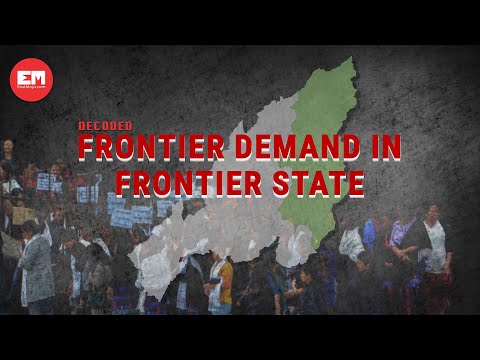
Here are five key points outlined by the Eastern Nagaland Women Organisation (ENWO) to justify this stance:
- Demand for Accountability:
By abstaining from elections, the residents in Eastern Nagaland are signaling to the government that their actions, or lack thereof, have consequences. This serves as a stark reminder to policymakers to prioritise accountability and transparency in their actions, knowing that the electorate will not simply accept “broken promises”.
Notably, ahead of the 2023 Assembly elections, the ENPO had resolved to boycott the polls over its demand for a separate state. This decision was called off after Union Home Minister Amit Shah had reportedly assured that a mutually agreed solution will be reached after following the due process and agreement will be implemented after the completion of the election process.
However, a year later, the unfilled assurances triggered the Eastern Nagas to take to the streets, demanding for a Frontier Nagaland Territory (FNT). In protest, the ENPO had reaffirmed its decision to abstain from participating in the upcoming parliamentary polls. The state government had recently appealed to the ENPO to participate in the polls.
- Urgency for immediate response:
The Eastern Nagas are now of the view that continuous participating in elections despite repeated failures can perpetuate a cycle of complacency within the government.
“By abstaining from elections, citizens are signalling that they expect real and tangible change, encouraging politicians to address issues that have long been ignored or neglected,” the ENWO said.
- Strengthening Democratic Principles:
Abstaining from elections is a form of democratic expression, highlighting citizens’ right to hold leaders accountable. The move to abstain from participating in an electoral process, they observed, is a form of protest as people exercises their democratic right to hold their leaders accountable and demand better governance.
To the people in Eastern Nagaland, this action reinforces the principle that elected officials serve at the pleasure of the people and must uphold their promises.
- Promotion of Alternative Engagement:
Abstaining from elections does not necessarily mean disengagement from civic life. To them, this also opens up avenues for alternative forms of activism and community involvement, such as grassroots movements, advocacy campaigns, or direct engagement with policymakers.
Such forms of engagement, they observed, can be more effective in driving meaningful change than simply casting a vote in a “flawed system”.
Dear Reader,
Every day, our team at EastMojo travels through rain, rough roads, and remote hills to bring you stories that matter – stories from your town, your people, your Northeast.
We do this because we believe in truthful, independent journalism. No big corporate backing, no government pressure – just honest reporting by local journalists who live and breathe the same air you do.
But to keep doing this work, we need you. Your small contribution helps us pay our reporters fairly, reach places others ignore, and keep asking the tough questions.
If you believe the Northeast deserves its own fearless voice, stand with us.
Support independent journalism. Be a Member.
Thank you,
Karma Paljor
Editor-in-Chief, eastmojo.com


- Building Solidarity and Unity:
The collective decision to abstain from election signifies solidarity among people who are “disillusioned with the current state of governance”.
To them, it demonstrates that people are willing to stand together in demanding better leadership and accountability as this unity can exert significant pressure on the government to address the concerns and grievances of the public.
Also Read | Eastern Nagaland reaffirms election boycott over frontier territory demand