

Violence in Manipur, now well into the third month, has crippled the state’s economy, ripped apart the social fabric, caused the death of over 140 people and left thousands homeless. But beyond the casualties and the helplessness, the ramifications of the violence are likely to be felt for years, not decades by the entire state.
Just ask the students.

Whether it is a heatwave, a pandemic, a flood-like situation, a government holiday or even a visit of, say, the Prime Minister, it is almost a guarantee that schools will be shut. No wonder, then, that when Manipur began burning on May 3, schools, colleges and other educational institutes were shut down immediately, and they have remained so ever since.
This means that while the rest of the world is moving on as usual, Manipur students are wondering when they will get their life back.
Years of preparation up in smoke
Imagine realising that all your dreams, aspirations, and goals have gone up in smoke, literally, in some cases, in just two or three days. Lalrosang, a student at Manipur University, was pursuing MSc in Biotechnology and aspired to become a professor one day. But today, it seems he could not be further from his dream for no fault of his.
When the violence began, Lalrosang, like many students, watched helplessly as all classes and research work came to a grinding halt. But the worst was yet to come: he also lost all academic certificates in the destruction unleashed by mobs on the college premises on May 3. Fearing for his life, he had to leave Manipur altogether, leaving his parents and his younger sisters behind.
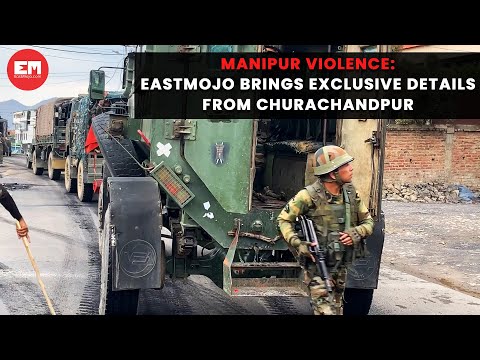
Now in Karnataka, Lalrosang is now working as a school teacher. Speaking with EastMojo, he said that starting from scratch is no longer possible. “Our parents cannot work anymore”, says Lalrosang, explaining why he had to take up a job.
For many students like him, staying alive has become their sole prayer. For others, the prospect of returning to the state seems like a daunting task not just in terms of physical safety but also due to the sheer psychological trauma.
“Going back, and pretending like nothing happened is very difficult to imagine right now”, says a student member of the Tribal Union of Manipur University (MU) who chose to remain anonymous.
How do we plan for the future?
There have been murmurs of starting online classes, but unlike the pandemic, which necessitated such steps, the situation now could not be more stark. Unlike the pandemic, when the world was under the grip of the deadly COVID-19 virus, this time, only Manipur is suffering, which means that for the state’s students, there is little recourse if things do not go as per plan. Samuel Haokip, a UPSC aspirant, talked to EastMojo about how violence disrupted his exam preparations. “I was preparing for my UPSC exams when violence occurred in May. We had to fill out our exams form and I selected Lamka as the exam centre. After violence broke out, we had no choice but to postpone our masters.”

While Samuel was fortunate enough to relocate to alternative examination centres outside the conflict zones, many others were unable to do so due to the escalating violence, which posed a direct threat to their lives. The government had made provisions for the students in the conflict zones by providing them with centres in Aizawl, Dimapur, Guwahati, and Jorhat.
Many students are still trying to come to grips with what caused such devastation in the state.
Zecharia, the Sports Secretary of the Manipur University Tribal Student’s Union (MUTSU), belongs to the state’s Naga community. He attributes the clashes to misunderstandings and expresses uncertainty about the true underlying cause. “The clashes started as a result of a misunderstanding. We don’t know what is the actual reason behind it”, he added.

Rebec Zote, a Political Science student at MU and a victim of the violence, highlights the collective efforts of the University students who have appealed to the University Grants Commission (UGC) requesting transfers to various Universities so that it prevents them from losing their semesters and enables them to commence their studies from where they left off. Unfortunately, the future appears bleak and uncertain for many students, including those from other states enrolled at Manipur University. Though the conflict continues between the two communities, the suffering extends beyond the warring communities, impacting the lives of all students regardless of their background.
Even if violence were to end today, there remain significant challenges to returning, including security concerns. “Nobody, including me, wants to go back”, says Zecharia. Some departments have resumed classes, yet several students have expressed a lack of desire to return, fearing for their safety.
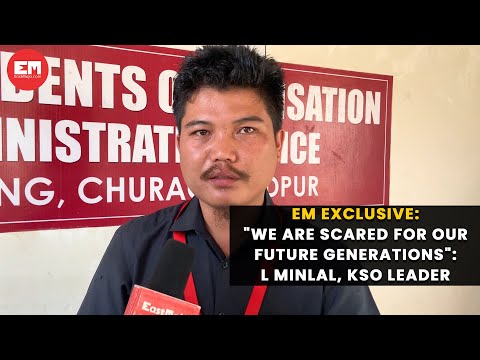
Various student associations and government bodies are trying to help people relocate to safer places. The Manipur University Tribal Student’s Union (MUTSU) has issued a notice asking the displaced Tribal students of MU to report and send their details to the concerned body.
Dear Reader,
Every day, our team at EastMojo travels through rain, rough roads, and remote hills to bring you stories that matter – stories from your town, your people, your Northeast.
We do this because we believe in truthful, independent journalism. No big corporate backing, no government pressure – just honest reporting by local journalists who live and breathe the same air you do.
But to keep doing this work, we need you. Your small contribution helps us pay our reporters fairly, reach places others ignore, and keep asking the tough questions.
If you believe the Northeast deserves its own fearless voice, stand with us.
Support independent journalism. Be a Member.
Thank you,
Karma Paljor
Editor-in-Chief, eastmojo.com


But for now, as Manipur continues to simmer, it is becoming increasingly clear that the state’s students face an uphill battle in their quest for knowledge. For a state with high unemployment rates, this means that the future, at least for students, seems as dark as the present.
Also Read | World Bank to provide $46 mn to Manipur for digital transformation