

Due to continuous rural flight and intercultural mixing, paired with the authorities’ general lack of action, many languages in the Northeast are becoming endangered.
In spite of some initiatives, some languages didn’t make it. The last speaker of Meghalaya’s Ruga died in the late 2000s. In 2012, The Hindu reported Tripura’s Saimar as having four speakers, marking it “severely endangered”. Since 2015, there’s been no news on its progress.
Dear Reader,
Every day, our team at EastMojo travels through rain, rough roads, and remote hills to bring you stories that matter – stories from your town, your people, your Northeast.
We do this because we believe in truthful, independent journalism. No big corporate backing, no government pressure – just honest reporting by local journalists who live and breathe the same air you do.
But to keep doing this work, we need you. Your small contribution helps us pay our reporters fairly, reach places others ignore, and keep asking the tough questions.
If you believe the Northeast deserves its own fearless voice, stand with us.
Support independent journalism. Be a Member.
Thank you,
Karma Paljor
Editor-in-Chief, eastmojo.com


Still, there have been measures to prevent languages from being endangered in the future. Tinang was introduced as a third vernacular in private schools of Upper Subansiri, Arunachal. Meanwhile, Nagaland’s Ao language is being taught by Languages Home, and a dedicated Facebook group. In 2012, UNESCO withdrew Khasi as an endangered language, considering it “safe”.
The following are five endangered Northeastern languages which need our attention.
Aimol, Manipur
This Tibeto-Burman language has only 6,000 speakers, with the majority concentrated in Eastern Manipur. Scholars suggest that Aimol derives from “Ai” meaning wild turmeric, and “Mol” meaning the hill where the turmeric is found. Spoken by the Aimol tribe, the language has witnessed efforts from the local Christian majority. The community has printed the New Testament in Aimol, as well as preserved samples of Bible passages through audio recordings.
Mara or Mra, Arunachal Pradesh
Mra is spoken by the Mara tribe in Arunachal. This minority tribal group is mainly located in Limeking, Upper Subansiri, and often confused with the Tagins. Only 350 people speak Mra. Some argue that it isn’t a distinct language, but a dialect of Bangni-Tagin. Nevertheless, The Wire reports that the Central Institute of Indian Languages is “working for the protection and preservation” of Mra, along with other endangered tongues, under a “central scheme”.

Tarao, Manipur
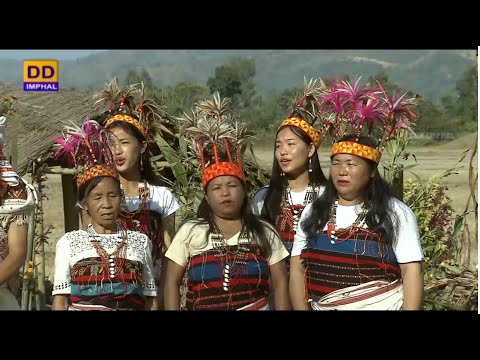
Tarao is spoken by Manipur’s minority Tarao tribe. According to Ethnologue, it is spread over four villages including Heikakpokpi and Sinakeithei. First Post notes it as having 830 speakers, while Imphal Free Press claims it to be 900/1,066. But Tarao won’t go down without a fight as the youth keep it alive through cultural shows. Tarao are said to have lived in Manipur since 1075 CE. Their folk songs and traditions indicate their origins to be from Burma.
Tai Khamyang, Assam
Khamyang is a “critically endangered” language spoken only by 50 people! All speakers reside in Powaimukh village in Tinsukia district, Assam. The tongue falls under the Kra-Dai family which has its roots in Southeast Asia. Sadly, the language shows no signs of expanding as all speakers are elderly villagers who only speak it when communicating with each other, or during ritual ceremonies.

Purum, Manipur
Manipur has many languages that are officially considered “endangered”. One of them is Purum, which is a Kuki-Chin language spoken in the Kangpokpi District of Manipur (Kuki Chin is a branch of 50 Sino-Tibetan languages in Northeast India). Purum is the smallest tribe of the 33 tribes of Manipur, and only 276 people speak it as of 2016.

Also read | ‘Rudraneel Uttarpurux’- A juicy mystery peppered with love, betrayal & hatred